The crimping process plays a critical role in the manufacturing of hydraulic hose assemblies, directly affecting sealing performance, tensile strength, and service life. Below are the key technical specifications followed in our production.
Ⅰ Cover Rubber Treatment: Depending on Thickness
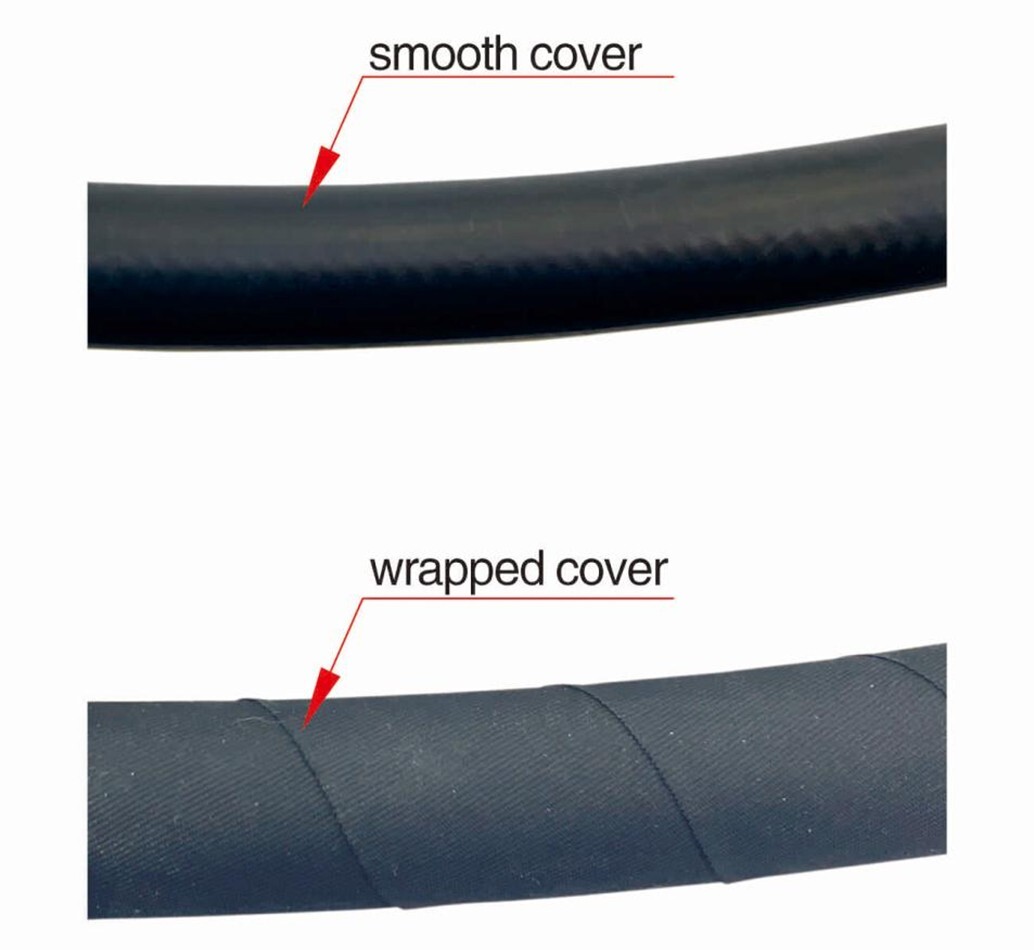
Cover thickness < 2 mm: Direct crimping is allowed without skiving.
Cover thickness ≥ 2 mm: The cover rubber must be skived before crimping to ensure the crimping die contacts the steel wire layer directly, providing stable gripping force and reliable impulse resistance.
Whether to strip the outer rubber or not affects not only the crimping fastening force between the fitting and the hose, but also the sealing reliability between them.
Ⅱ Ferrule Ridge Design: Anti-Detach vs. Sealing Ridges
For ferrules with five ridges:
The first three ridges are anti-detach ridges, mainly for pull-off resistance.
The last two ridges are sealing ridges, ensuring sealing performance.
Height difference: The sealing ridges should be approximately 0.5 mm lower than the anti-detach ridges to avoid over-compression and damage to the inner rubber layer.
Ⅲ Ferrule Material Selection: Based on Skiving Process
With skiving (cover removed): Use 20# steel for higher strength to withstand direct contact with the steel wire layer.
Without skiving: Use 10# steel for better ductility, allowing uniform deformation over the rubber buffer layer.
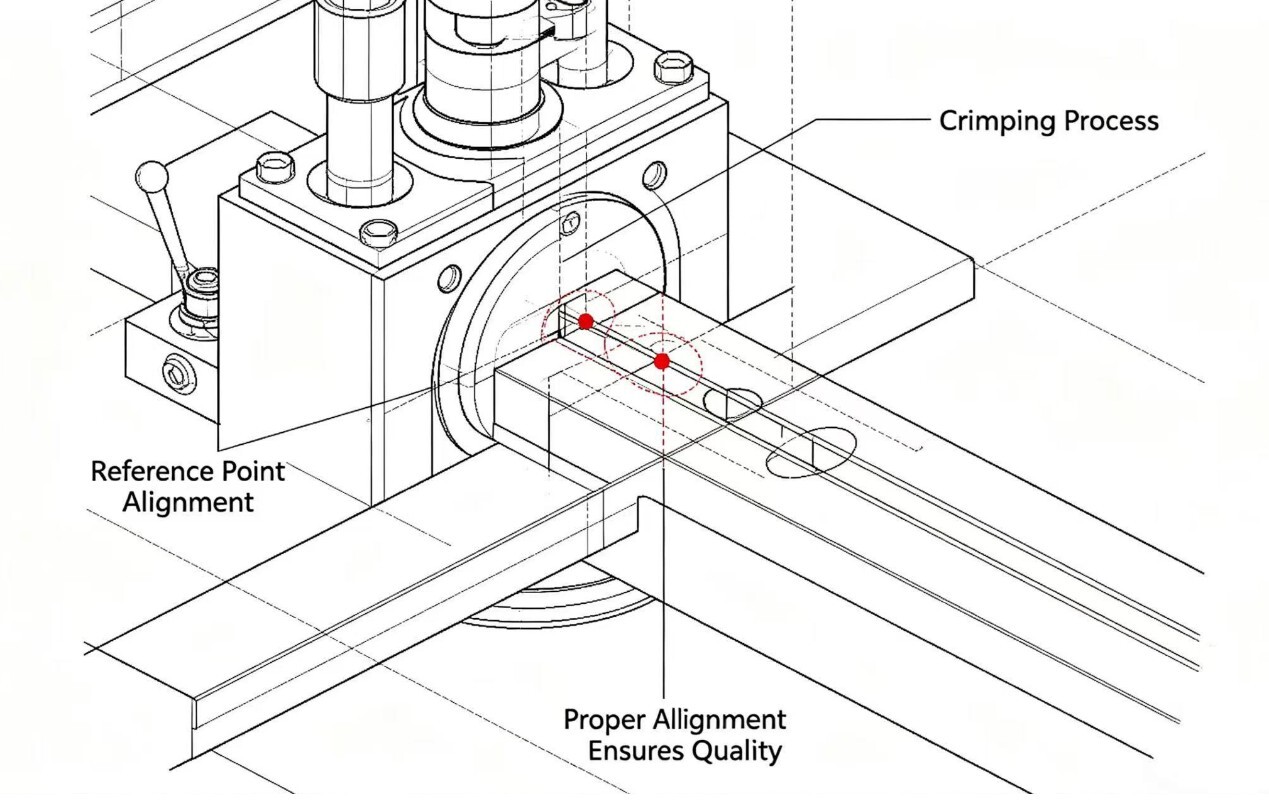
Ⅳ Benchmark Alignment Before Crimping
Strict alignment of the following benchmarks is required to ensure coaxiality and positioning accuracy:
Crimping die and ferrule aligning benchmark
Hose and fitting aligning benchmark
Ferrule and fitting aligning benchmark
Nut and fitting aligning benchmark
All benchmarks must be aligned on the same axis before crimping to avoid eccentric pressure or misalignment.
Ⅴ Post-Crimping Dimensional and Structural Requirements
a) Fitting end position relative to ferrule
After crimping, the fitting end must extend at least 3 mm longer than the ferrule end. This prevents stress concentration at the hose root and improves bending fatigue life.
b) Misalignment requirement between ferrule ridges and fitting protrusions
After crimping deformation, the ferrule ridges must not align with any protruding points (e.g., steps or shoulders) on the fitting. Misalignment prevents local over-compression that could damage the fitting surface or the inner rubber layer of the hose.